 Hyperhaul
APPLE IIGS
Hyperhaul
APPLE IIGS
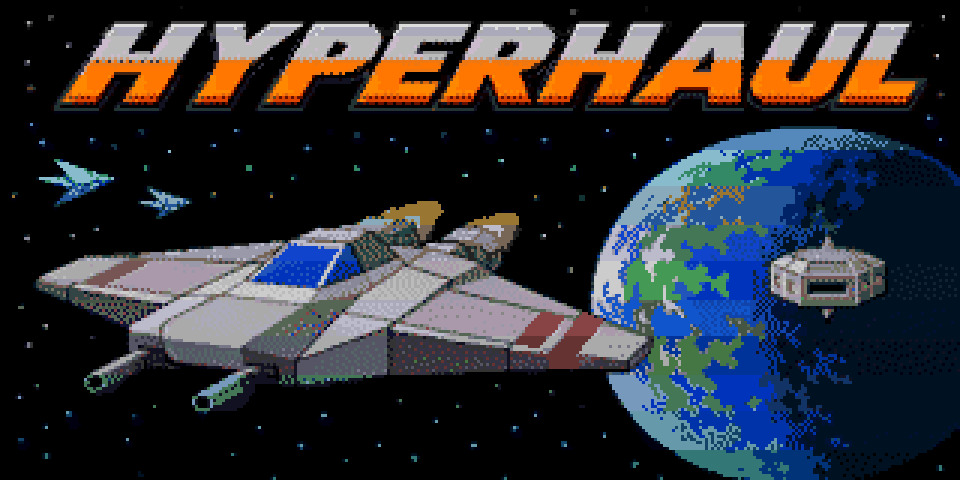
Trade grain for gold and computers for credits. Hunt pirates for their bounties, or run guns for the warlords and stay a jump ahead of the police. Earn your rating from Greenhorn to Legend, and when the Guild calls, answer. Hyperhaul is a new game in the spirit of the first Elite, written for the Apple IIgs in 65816 assembly, its ships drawn as filled, shaded polygons in real time.
Trading, the charts and hyperspace, combat, the police, the Shard, both missions, music and sound, saving and loading: all there, every frame checked against a model of the game.
Still to come before the release: balancing from long test runs, and a run on real hardware. The disk follows then.
You start docked at the station of Kaniveda with a Kestrel freighter, a pulse laser and a hundred credits. What you make of it is up to you.
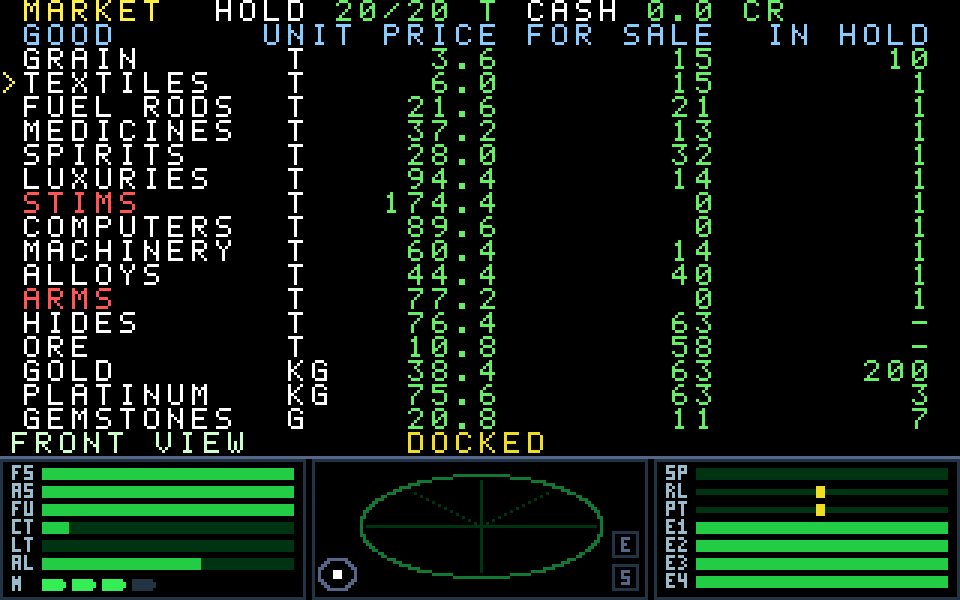
Every system has its economy, from rich forge worlds to poor frontier farms, and its market follows it. Seventeen goods, two of them illegal; prices that move with every visit.
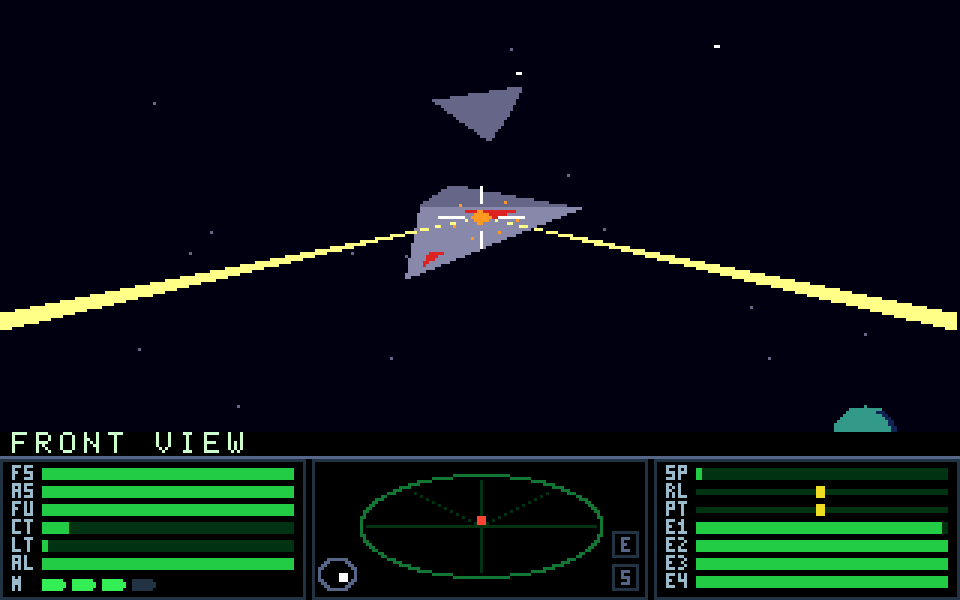
Pulse, beam, mining and military lasers on four mounts, homing missiles, an E.C.M., a nova charge. Every kill counts towards your rating; pirates carry a price on their heads.
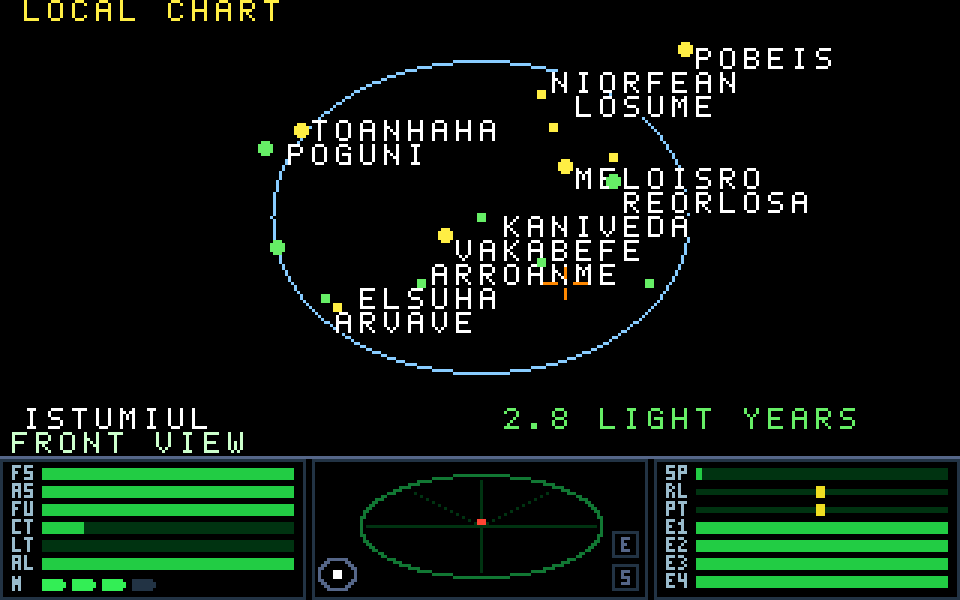
Eight charts of 256 systems, each with its planet, people, government and tech level, generated by the game as the first Elite did. Hyperspace takes you there; a mis-jump drops you among the Shard.
Every ship is a filled, lit polygon model, drawn by the game frame after frame in the IIgs's own fill mode. These pictures are made by the same code.
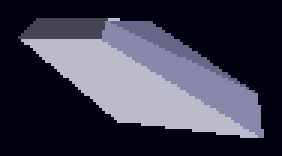
The Guild's freighter, and yours: 20 tonnes of hold, a pulse laser, three missiles.
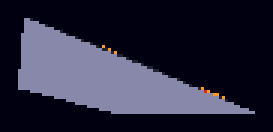
Fast and cheap; pirates fly them in packs of up to four.
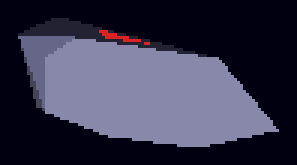
A hard laser and two missiles. Take it seriously.

Quick and well armed, and after you if your record is bad.
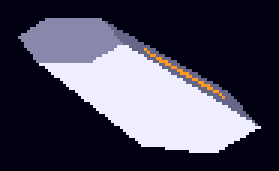
The common trader. It fights back, and the police take its side.
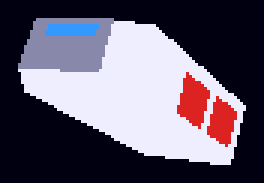
Slow, with a big hold, often loaded with cargo canisters.
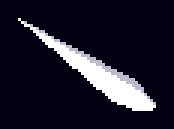
The fastest ship in space. Hard to catch.
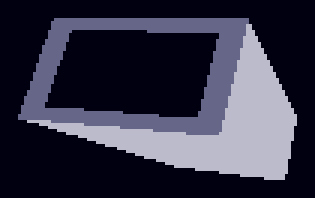
Built with a scoop for what floats free.
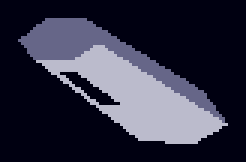
Rare, slow and well shielded.
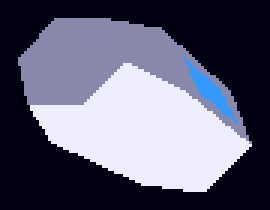
Between the station and the planet. Unarmed.
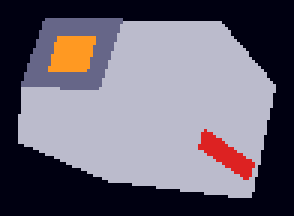
Out among the rocks.

It attacks the wanted, and anyone who fires on it.
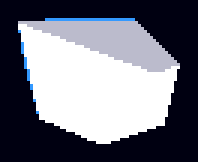
Crystal, fast and tough; it launches Needles when it is hurt.

Without its Spindle it drifts: scoop it for Shard relics.
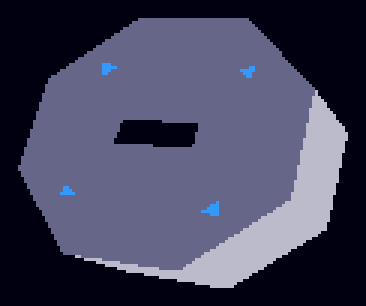
Every system's station, turning slowly. Dock through its slot.
Every picture here is a screen of the game, taken in the emulator byte for byte: the 320 x 200 Super Hi-Res screen, shown three times as big.
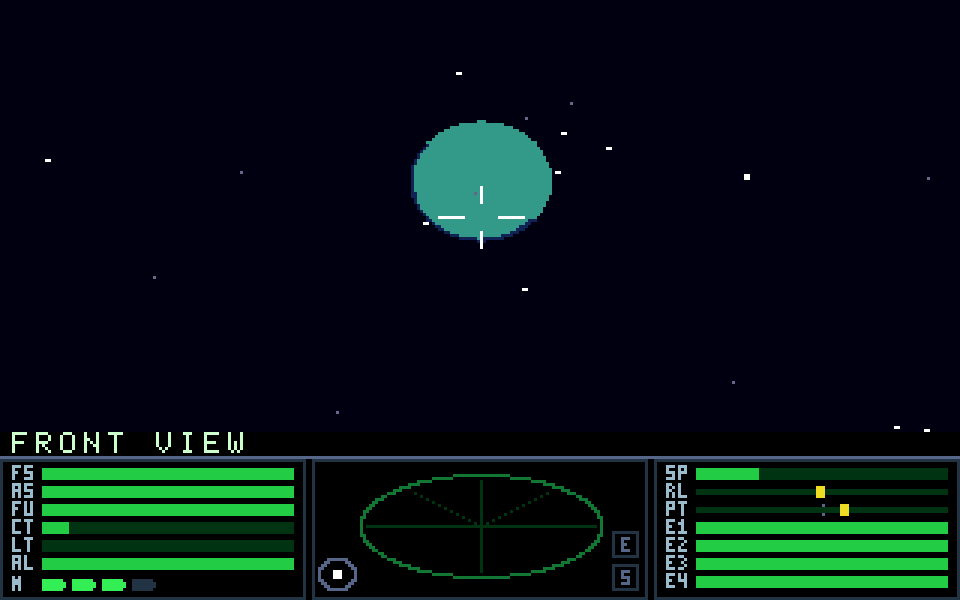
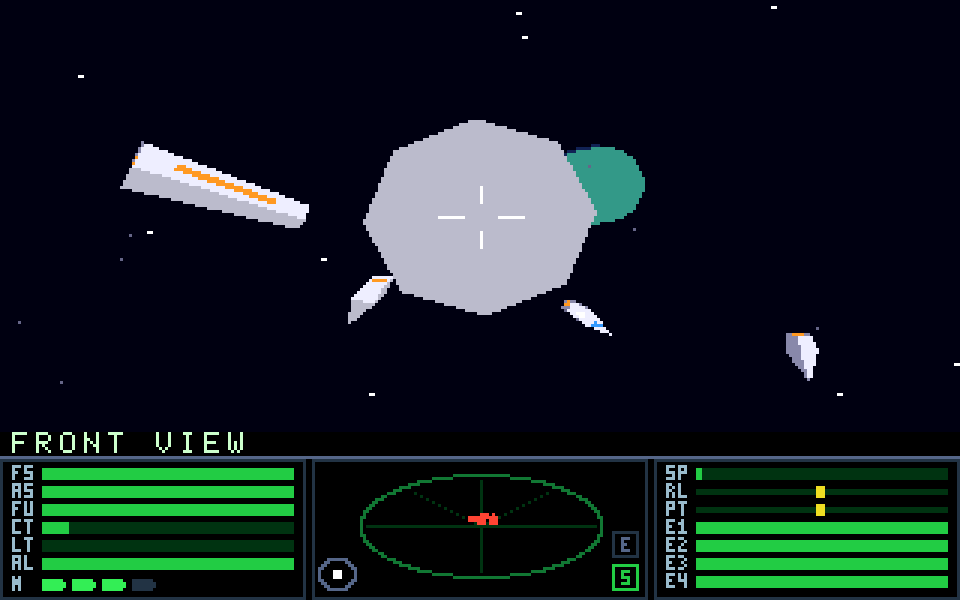
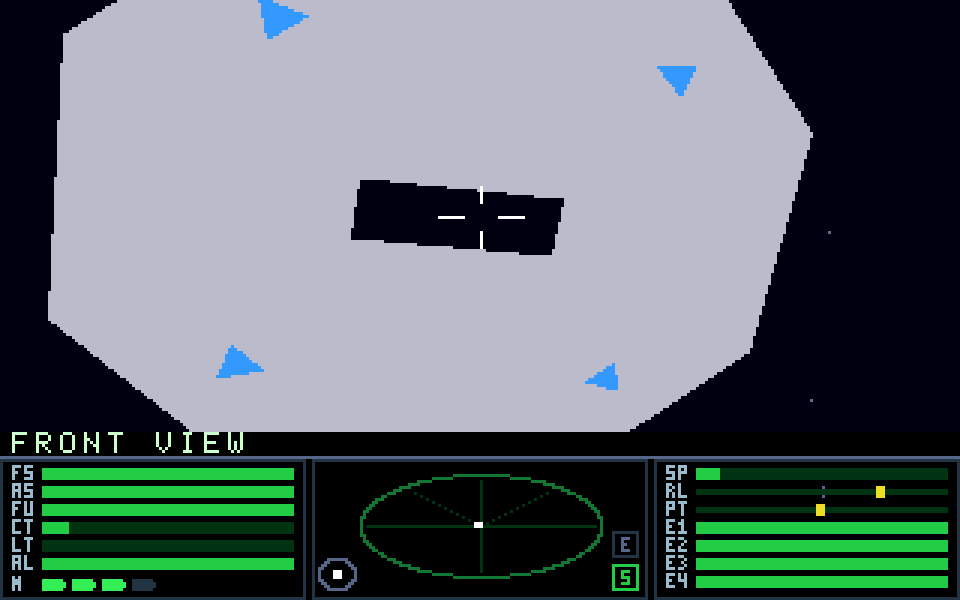
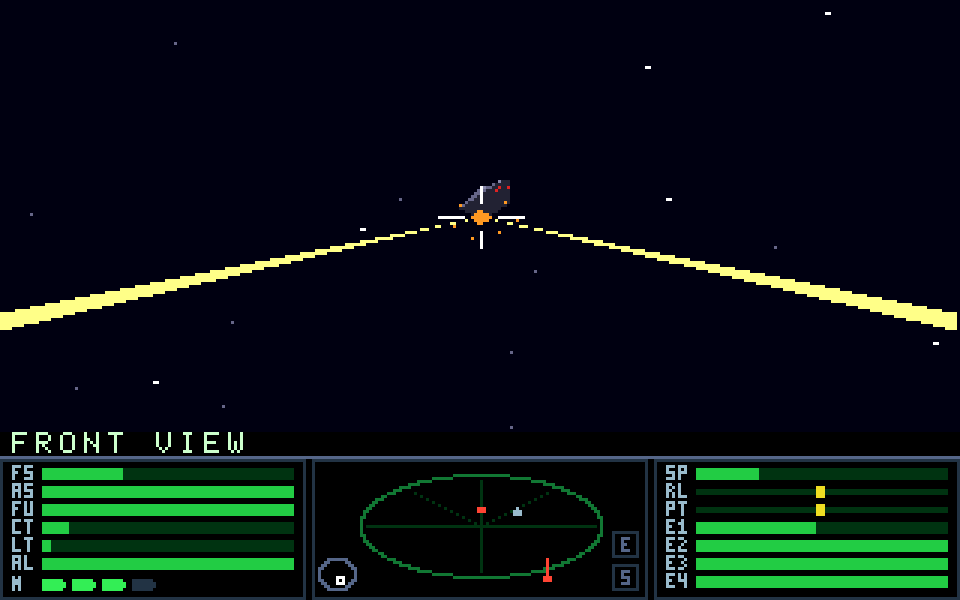
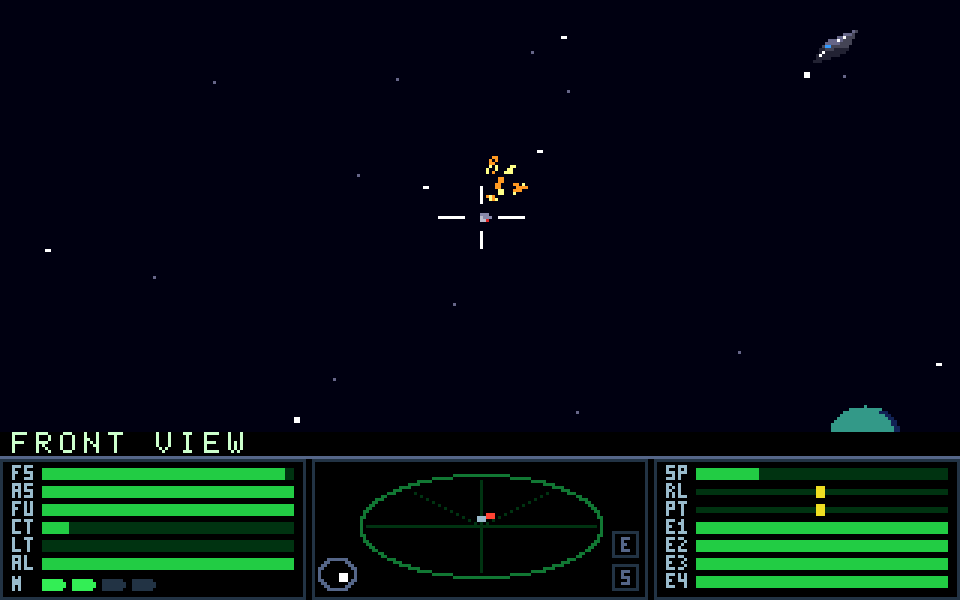
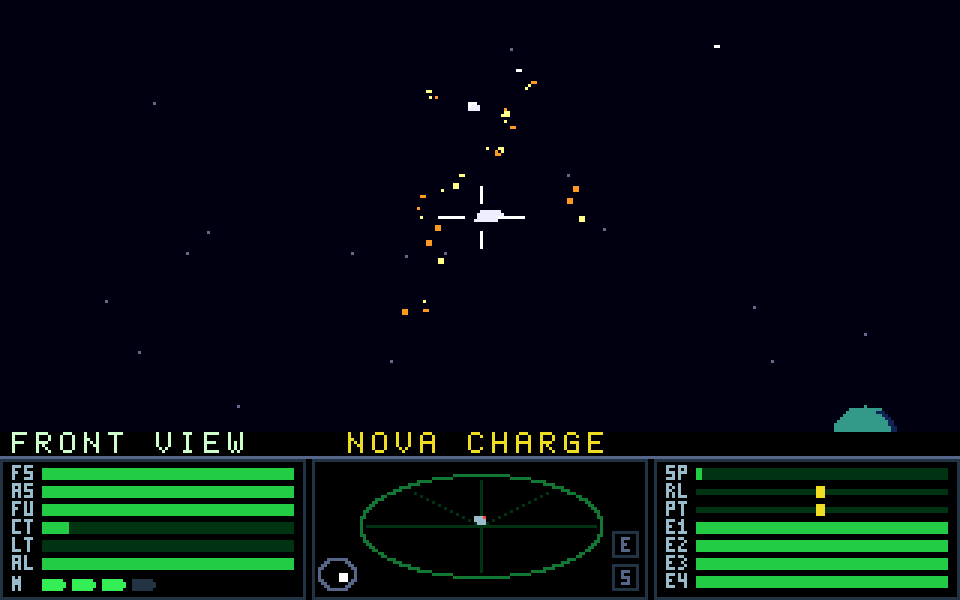
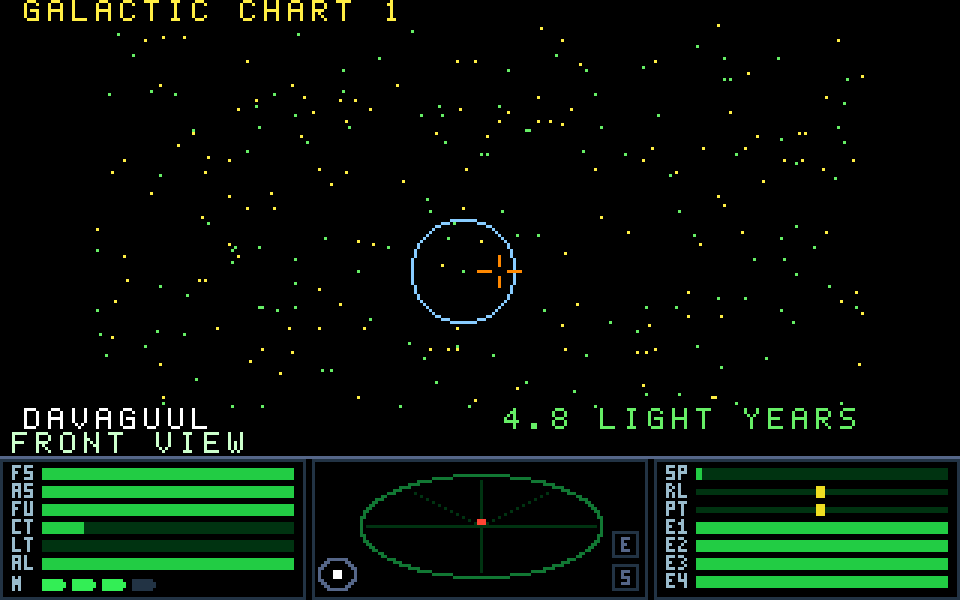
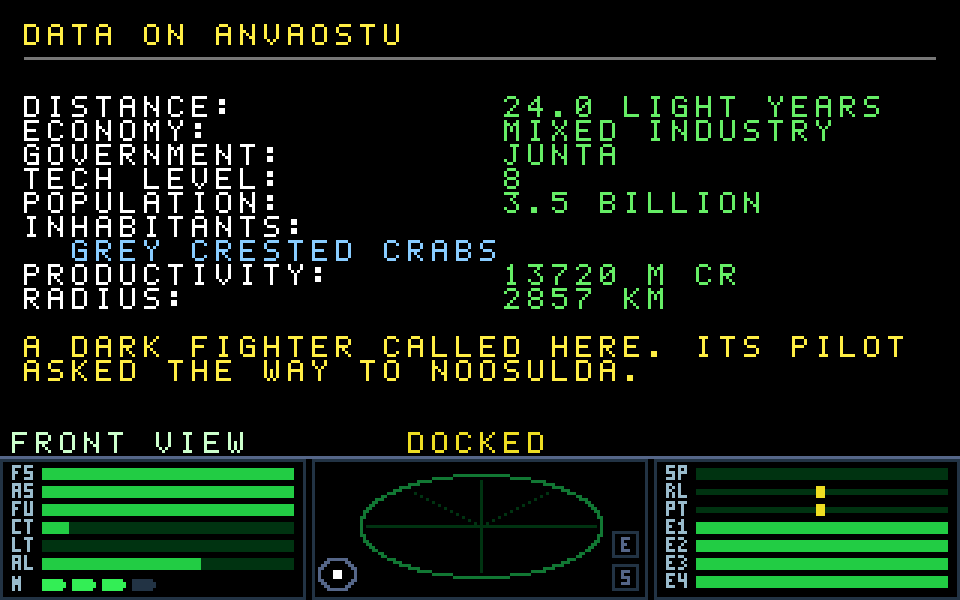
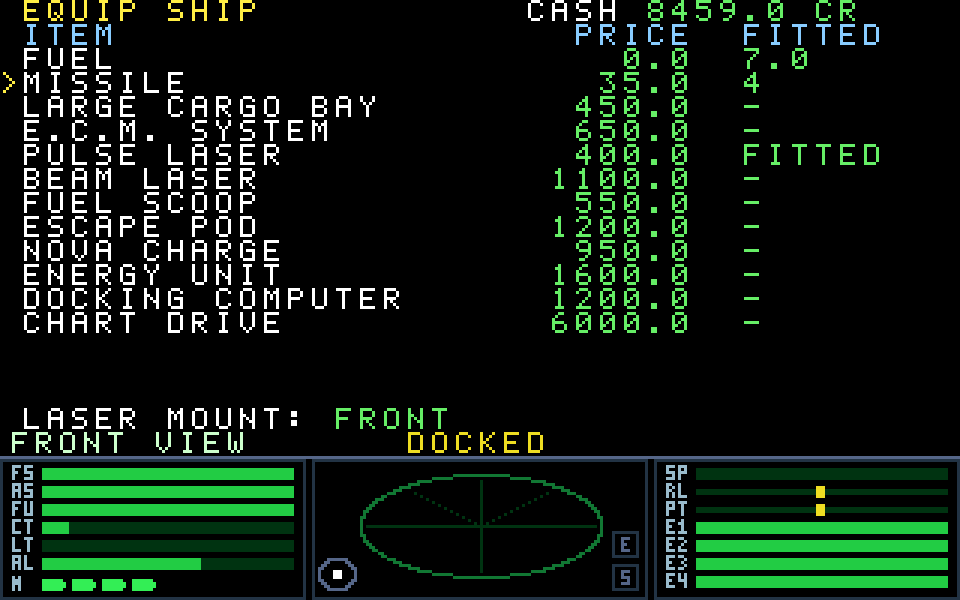
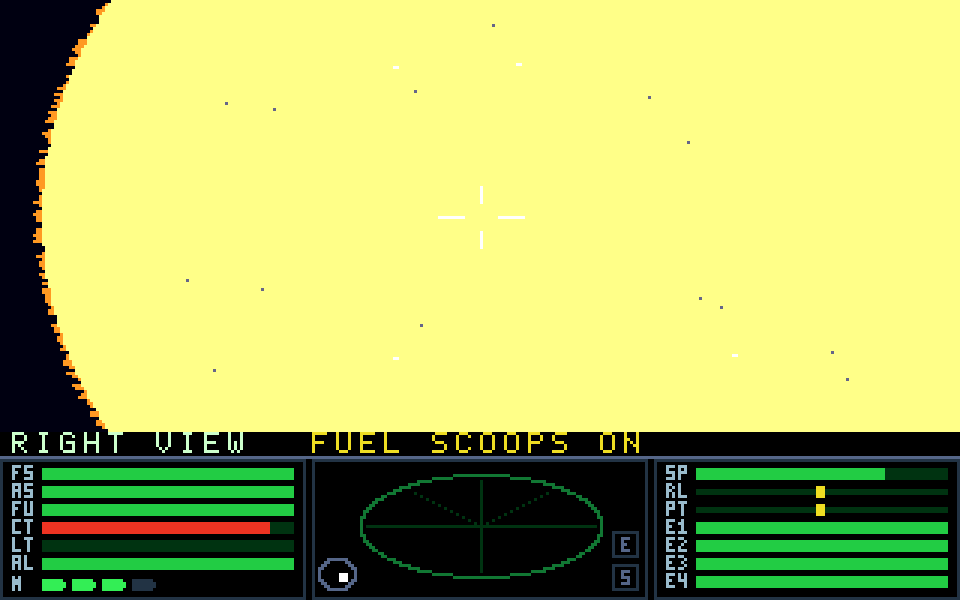
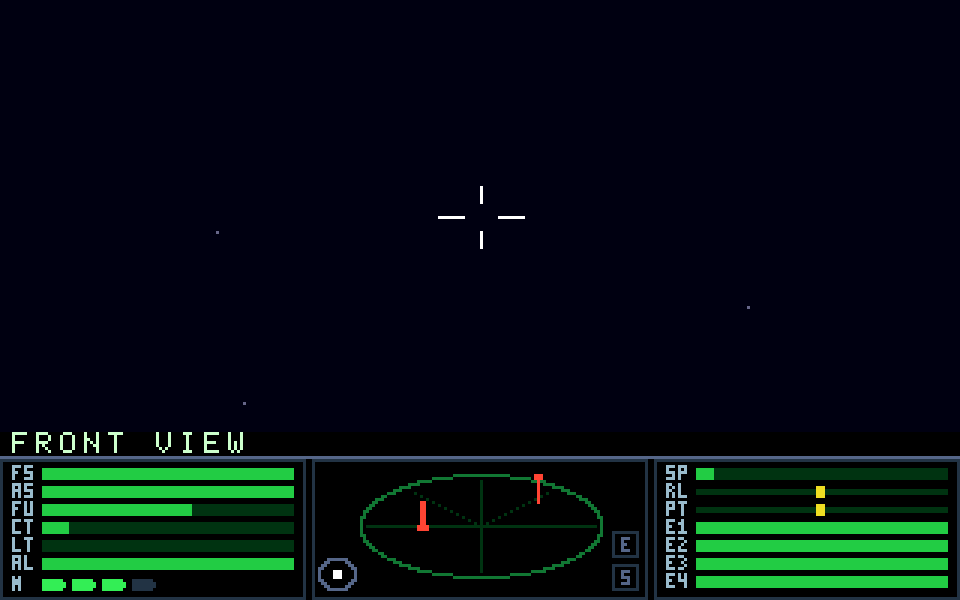
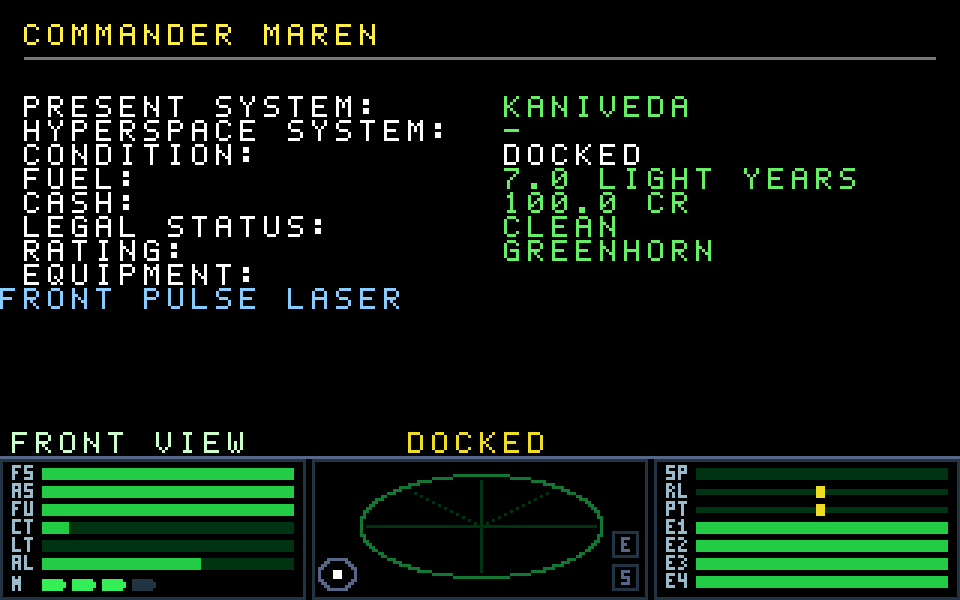
Two original tunes, synthesized for the IIgs's Ensoniq sound chip: nothing sampled. These recordings are the chip's own sound, rendered from the game's music data. As in the first Elite, there is no music in flight, except while the docking computer flies you in.
Rock in E minor at 150: chugging power chords, a saw bass, a rock beat and a screaming lead.
D major, 3/4: a lilting lead with its echo, plucked chords, the bass on the first beat.
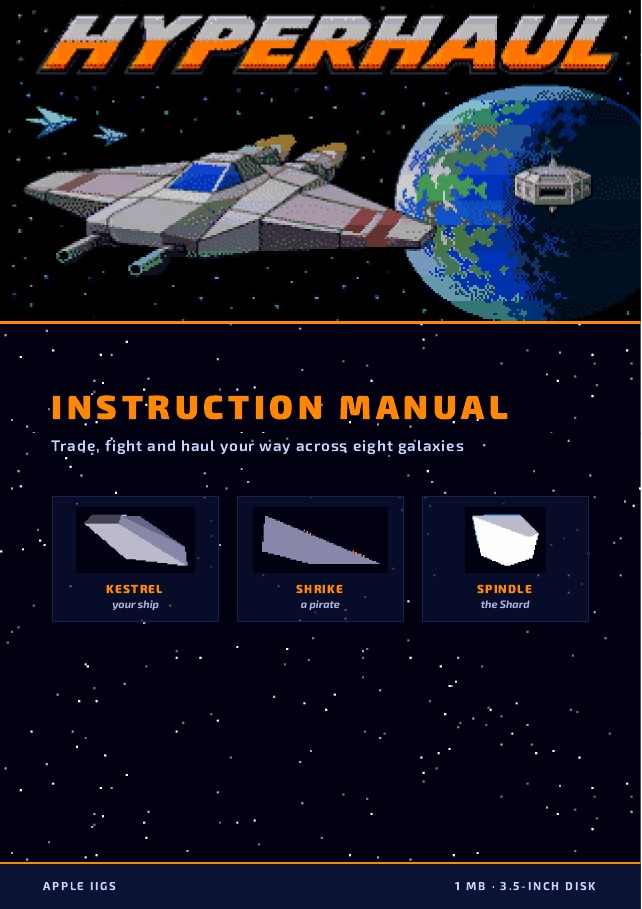
As it would have stood on the shelf.
A picture of a box: the game will come as a disk image.
The IIgs's Super Hi-Res screen can fill a line's colour by itself to the next change. Hyperhaul draws only the edges of its shaded ships, and the hardware fills them in: the vector engine of FILLHARMONIC, grown into a game.
About 18,000 lines of assembly for Merlin 32: the renderer, the flight model, the galaxy generator, the screens, the music player. The game runs from one 800K disk in 1 MB.
A Python model of the whole game runs beside it. Every test scene, over 700 frames of flight, combat, docking and screens, is played in the emulator and compared with the model to the last byte of the screen and the game's state.
The 2,048 systems, their names, economies, governments and markets are generated by the game from three seeds, as the first Elite did, so the disk holds no star charts at all.
Ten sound effects and two tunes, all synthesized in Python and laid out in the chip's 64K of sound memory; the music player runs in the video interrupt.
The rules follow the first Elite (Ian Bell and David Braben, 1984), as explained in Mark Moxon's annotated source. The ships, galaxies, names, words, pictures and music are Hyperhaul's own.